To Throw or Hand Mold
Pottery making is an ancient craft that has evolved over thousands of years, yet the fundamental question remains: should you throw your piece on a wheel or hand mold it? Both techniques offer distinct advantages and challenges, and understanding the differences can help you choose the right approach for your creative vision.
Whether you're a beginner exploring clay for the first time or an experienced potter looking to refine your skills, knowing when to use each method will enhance your work and expand your artistic possibilities.
What is throwing?
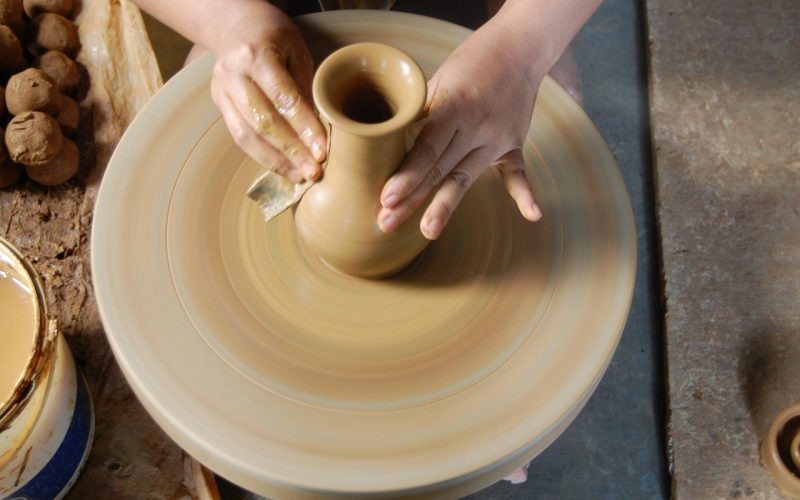
Throwing refers to the technique of shaping clay on a potter's wheel. As the wheel spins, the potter uses their hands to guide and form the clay into symmetrical shapes like bowls, vases, and plates. This method requires practice and coordination, as you must centre the clay before shaping it—a skill that can take time to master.
The beauty of throwing lies in its ability to create uniform, elegant forms quickly once you've developed the necessary technique. It's particularly well-suited for functional pottery where consistency matters, such as dinnerware sets or matching mugs.
What is hand molding?
Hand molding, sometimes called handbuilding, encompasses several techniques including pinching, coiling, and slab construction. These methods don't require a potter's wheel, making them more accessible for beginners and those without studio equipment.
Pinching involves shaping clay by pressing it between your fingers and thumb. Coiling uses rolled clay "snakes" that are stacked and blended together. Slab construction involves rolling out flat pieces of clay and assembling them like walls. Each technique offers unique creative possibilities and allows for more organic, asymmetrical forms that can be difficult to achieve on the wheel.
Comparing the two approaches
Throwing excels at creating symmetrical, refined pieces with smooth surfaces and consistent wall thickness. It's faster for producing multiples and ideal for functional pottery. However, it requires significant practice, specialised equipment, and works best with specific clay bodies that have good plasticity.
Hand molding offers greater creative freedom and accessibility. You can create sculptural forms, textured surfaces, and pieces with personality that throwing might not easily achieve. It's also more forgiving for beginners and requires minimal equipment—just your hands, some basic tools, and clay.
Which technique should you choose?
Your choice depends on several factors: your artistic goals, available equipment, skill level, and the type of pieces you want to create. Many potters use both techniques, sometimes combining them in a single piece.
If you're drawn to functional, symmetrical pottery and enjoy the meditative rhythm of the wheel, throwing might be your path. If you prefer sculptural work, organic forms, or don't have access to a wheel, hand molding offers endless possibilities.
The most successful potters often master both approaches, allowing them to choose the best technique for each project. Start with whichever method appeals to you most, but don't be afraid to explore the other—each will teach you something valuable about working with clay and enhance your overall pottery skills.